# Caring for mature male tarantulas.
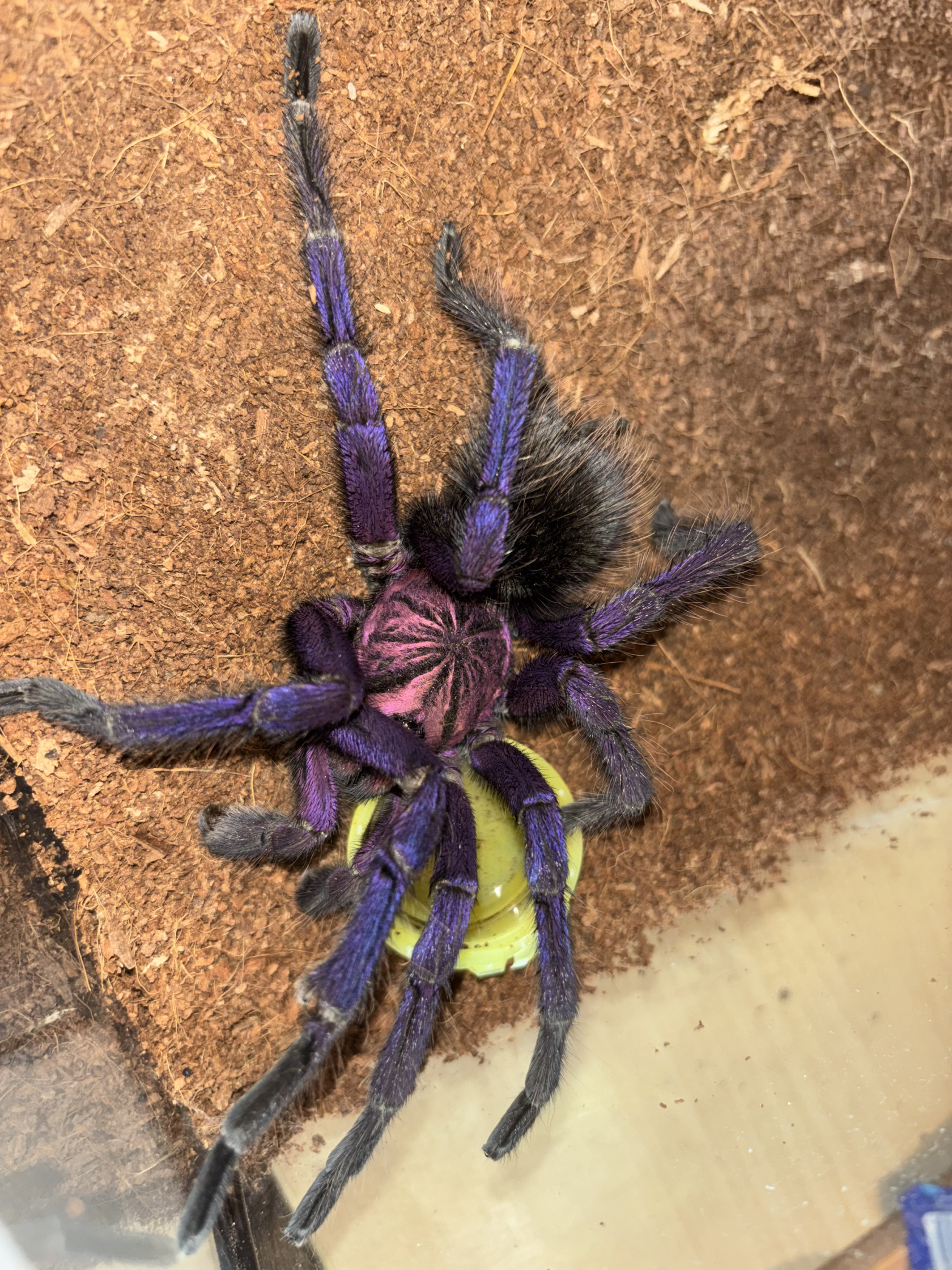
Male tarantulas have a significantly shorter lifespan than females, with some species reaching maturity within a year of moulting into a sling, and some may reach 5 years old before maturing (grammastola, euthalus, homeomma). When males have their final moult, they become massively different in appearance; they have much longer legs, some species grow tibial hooks on their 1st legs and species in the pamphobetus, phormictopus, and xenethis genus develop insanely vibrant colours. However, once reaching maturity, their time is limited they will usually pass away in under a year. They will create a sperm web, onto which they deposit sperm, and then collect it onto their emboli (pedipalps). During this time, they will likely refuse to eat or drink as their only purpose is to find a female and breed.
There are ways to increase the duration of time that a mature male can live. You can decrease their temperature by a couple of degrees; this will slightly slow them down without causing any harm. Decreasing the size of their enclosure will also increase their lifespan, as they have less room to wander around in search of a female. Although it is unlikely they will eat or drink, it is important to still offer it, as we have observed males eating after maturity.
Below: Pamphobetus sp. Costa Mature Male Below: Pamphobetus sp. Costa Adult female
[  ](https://carebase.apes.org.uk/uploads/images/gallery/2026-06/JfaeCLdYqjVkQoyp-image.png)[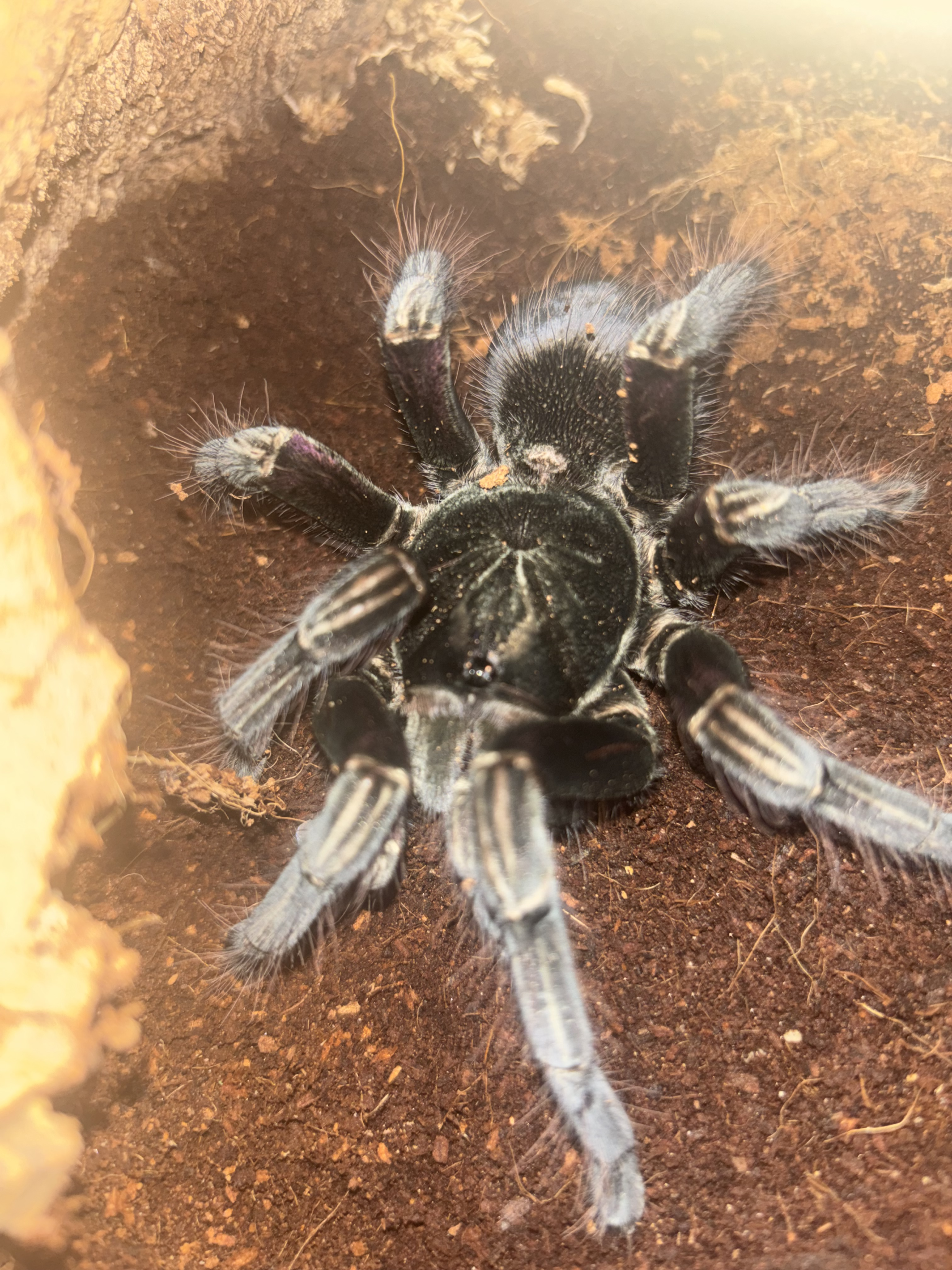](https://carebase.apes.org.uk/uploads/images/gallery/2026-06/uu5e5TszgwdRQHwc-image.png)