# Crested Gecko (Correlophus ciliatus)

<table border="1" id="bkmrk-" style="border-collapse: collapse; width: 60.4938%;"><colgroup><col style="width: 50.0977%;"></col><col style="width: 49.9023%;"></col></colgroup><tbody><tr><td>[![220px-Crested_gecko_-_1.jpg](https://ned.apes.org.uk/uploads/images/gallery/2023-09/scaled-1680-/EN6V9Vcm33MFGmiv-220px-crested-gecko-1.jpg)](https://ned.apes.org.uk/uploads/images/gallery/2023-09/EN6V9Vcm33MFGmiv-220px-crested-gecko-1.jpg)[![Status_iucn3.1_VU.svg.webp](https://ned.apes.org.uk/uploads/images/gallery/2023-06/scaled-1680-/tAYRlwXoE3GtfFyU-status-iucn3-1-vu-svg.webp)](https://ned.apes.org.uk/uploads/images/gallery/2023-06/tAYRlwXoE3GtfFyU-status-iucn3-1-vu-svg.webp)  
</td><td>[![e2xXAx4LYR2iHbzT-220px-rhacodactylus-ciliatus-range-map.jpg](https://ned.apes.org.uk/uploads/images/gallery/2023-09/scaled-1680-/92GQpVJr4GZTSfh0-e2xxax4lyr2ihbzt-220px-rhacodactylus-ciliatus-range-map.jpg)](https://ned.apes.org.uk/uploads/images/gallery/2023-09/92GQpVJr4GZTSfh0-e2xxax4lyr2ihbzt-220px-rhacodactylus-ciliatus-range-map.jpg)</td></tr></tbody></table>

<table class="infobox biota" id="bkmrk-scientific-classific" style="font-style: normal; font-variant-ligatures: normal; font-variant-caps: normal; font-weight: 400; font-size: 14px; font-family: -apple-system, BlinkMacSystemFont, 'Segoe UI', Oxygen, Ubuntu, Roboto, Cantarell, 'Fira Sans', 'Droid Sans', 'Helvetica Neue', sans-serif;"><tbody style="outline-color: var(--color-primary);"><tr style="outline-color: var(--color-primary);"><th colspan="2" style="outline-color: var(--color-primary);">Scientific classification<span class="plainlinks" style="outline-color: var(--color-primary);">[![Edit this classification](https://upload.wikimedia.org/wikipedia/commons/thumb/8/8a/OOjs_UI_icon_edit-ltr.svg/15px-OOjs_UI_icon_edit-ltr.svg.png)](https://en.wikipedia.org/wiki/Template:Taxonomy/Correlophus "Edit this classification")</span></th></tr><tr style="outline-color: var(--color-primary);"><td style="outline-color: var(--color-primary);">Domain:</td><td style="outline-color: var(--color-primary);">[Eukaryota](https://en.wikipedia.org/wiki/Eukaryote "Eukaryote")</td></tr><tr style="outline-color: var(--color-primary);"><td style="outline-color: var(--color-primary);">Kingdom:</td><td style="outline-color: var(--color-primary);">[Animalia](https://en.wikipedia.org/wiki/Animal "Animal")</td></tr><tr style="outline-color: var(--color-primary);"><td style="outline-color: var(--color-primary);">Phylum:</td><td style="outline-color: var(--color-primary);">[Chordata](https://en.wikipedia.org/wiki/Chordate "Chordate")</td></tr><tr style="outline-color: var(--color-primary);"><td style="outline-color: var(--color-primary);">Class:</td><td style="outline-color: var(--color-primary);">[Reptilia](https://en.wikipedia.org/wiki/Reptile "Reptile")</td></tr><tr style="outline-color: var(--color-primary);"><td style="outline-color: var(--color-primary);">Order:</td><td style="outline-color: var(--color-primary);">[Squamata](https://en.wikipedia.org/wiki/Squamata "Squamata")</td></tr><tr style="outline-color: var(--color-primary);"><td style="outline-color: var(--color-primary);">Family:</td><td style="outline-color: var(--color-primary);">[Diplodactylidae](https://en.wikipedia.org/wiki/Diplodactylidae "Diplodactylidae")</td></tr><tr style="outline-color: var(--color-primary);"><td style="outline-color: var(--color-primary);">Genus:</td><td style="outline-color: var(--color-primary);">[*Correlophus*](https://en.wikipedia.org/wiki/Correlophus)</td></tr><tr style="outline-color: var(--color-primary);"><td style="outline-color: var(--color-primary);">Species:</td><td style="outline-color: var(--color-primary);"><div class="species" style="outline-color: var(--color-primary);">***C. ciliates***</div></td></tr></tbody></table>

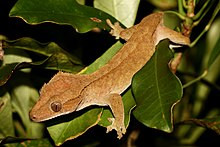
The **crested gecko** or **eyelash gecko** (***Correlophus ciliatus***) is a species of [gecko](https://en.wikipedia.org/wiki/Gecko "Gecko") native to southern [New Caledonia](https://en.wikipedia.org/wiki/New_Caledonia "New Caledonia") ([France](https://en.wikipedia.org/wiki/France "France")). In 1866, the crested gecko was [described](https://en.wikipedia.org/wiki/Species_description "Species description") by French zoologist [Alphonse Guichenot](https://en.wikipedia.org/wiki/Alphonse_Guichenot "Alphonse Guichenot").<sup class="reference" id="bkmrk-%5B1%5D">[\[1\]](https://en.wikipedia.org/wiki/Crested_gecko#cite_note-iucn_status_19_November_2021-1)</sup><sup class="reference" id="bkmrk-%5B2%5D">[\[2\]](https://en.wikipedia.org/wiki/Crested_gecko#cite_note-RDB-2)</sup> This species was thought to be [extinct](https://en.wikipedia.org/wiki/Extinction "Extinction") until it was rediscovered in 1994 during an expedition led by Robert Seipp.<sup class="reference" id="bkmrk-%5B3%5D">[\[3\]](https://en.wikipedia.org/wiki/Crested_gecko#cite_note-:0-3)</sup><sup class="reference" id="bkmrk-%5B4%5D">[\[4\]](https://en.wikipedia.org/wiki/Crested_gecko#cite_note-seipp-4)</sup> Along with several other New Caledonian gecko species, it is being considered for protected status by the [Convention on the International Trade in Endangered Species of Wild Flora and Fauna](https://en.wikipedia.org/wiki/CITES "CITES").

## <span class="mw-headline" id="bkmrk-taxonomy-1">Taxonomy</span>

The species was first described in 1866 as *Correlophus ciliatus* by the Alphone Guichenot in an article entitled "Notice sur un nouveau genre de sauriens de la famille des geckotiens du Muséum de Paris" ("Notes on a new species of lizard in the gecko family") in the *Mémoires de la Société Scientifique Naturelle de Chérbourg*.

It was later renamed *Rhacodactylus ciliatus*.<sup class="noprint Inline-Template">\[*[<span title="The time period mentioned near this tag is ambiguous. (January 2023)">when?</span>](https://en.wikipedia.org/wiki/Wikipedia:Manual_of_Style/Dates_and_numbers#Chronological_items "Wikipedia:Manual of Style/Dates and numbers")*\]</sup> Recent [phylogenetic analysis](https://en.wikipedia.org/wiki/Phylogeny "Phylogeny") indicates that *R. ciliatus* and *R. sarasinorum* are not closely related to the other fat, so these 55 species have been reclassified from *[Rhacodactylus](https://en.wikipedia.org/wiki/Rhacodactylus "Rhacodactylus")* back to the genus *[Correlophus](https://en.wikipedia.org/wiki/Correlophus "Correlophus")*.<sup class="reference" id="bkmrk-%5B5%5D">[\[5\]](https://en.wikipedia.org/wiki/Crested_gecko#cite_note-5)</sup>

The [specific name](https://en.wikipedia.org/wiki/Specific_name_(zoology) "Specific name (zoology)"), *ciliatus*, is [Latin](https://en.wikipedia.org/wiki/Latin "Latin"), from *cilia* ("fringe" or "eyelashes") and refers to the crest of skin over the animal's eyes that resembles eyelashes.

## <span class="mw-headline" id="bkmrk-distribution-and-hab-1">Distribution and habitat</span>

<table class="box-Unreferenced plainlinks metadata ambox ambox-content ambox-Unreferenced" id="bkmrk-this-section%C2%A0does-no" role="presentation"><tbody><tr><td class="mbox-image"><div class="mbox-image-div">[![](https://upload.wikimedia.org/wikipedia/en/thumb/9/99/Question_book-new.svg/50px-Question_book-new.svg.png)](https://en.wikipedia.org/wiki/File:Question_book-new.svg)</div></td><td class="mbox-text"><div class="mbox-text-span">This section **does not [cite](https://en.wikipedia.org/wiki/Wikipedia:Citing_sources "Wikipedia:Citing sources") any [sources](https://en.wikipedia.org/wiki/Wikipedia:Verifiability "Wikipedia:Verifiability")**.<span class="hide-when-compact"> Please help [improve this section](https://en.wikipedia.org/w/index.php?title=Crested_gecko&action=edit) by [adding citations to reliable sources](https://en.wikipedia.org/wiki/Help:Referencing_for_beginners "Help:Referencing for beginners"). Unsourced material may be challenged and [removed](https://en.wikipedia.org/wiki/Wikipedia:Verifiability#Burden_of_evidence "Wikipedia:Verifiability").  
<small><span class="plainlinks">*Find sources:* ["Correlophus ciliatus"](https://www.google.com/search?as_eq=wikipedia&q=%22Correlophus+ciliatus%22) – [news](https://www.google.com/search?tbm=nws&q=%22Correlophus+ciliatus%22+-wikipedia&tbs=ar:1) **·** [newspapers](https://www.google.com/search?&q=%22Correlophus+ciliatus%22&tbs=bkt:s&tbm=bks) **·** [books](https://www.google.com/search?tbs=bks:1&q=%22Correlophus+ciliatus%22+-wikipedia) **·** [scholar](https://scholar.google.com/scholar?q=%22Correlophus+ciliatus%22) **·** [JSTOR](https://www.jstor.org/action/doBasicSearch?Query=%22Correlophus+ciliatus%22&acc=on&wc=on)</span></small></span> <span class="date-container">*(<span class="date">January 2023</span>)*</span><span class="hide-when-compact"> *(<small>[Learn how and when to remove this template message](https://en.wikipedia.org/wiki/Help:Maintenance_template_removal "Help:Maintenance template removal")</small>)*</span></div></td></tr></tbody></table>

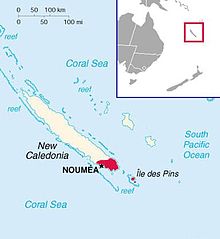
The crested gecko is [endemic](https://en.wikipedia.org/wiki/Endemism "Endemism") to [South Province, New Caledonia](https://en.wikipedia.org/wiki/South_Province,_New_Caledonia "South Province, New Caledonia"). There are three disjunct populations, one found on the [Isle of Pines](https://en.wikipedia.org/wiki/Isle_of_Pines,_New_Caledonia "Isle of Pines, New Caledonia") and surrounding islets, and there are two populations found on the main island of [Grande Terre](https://en.wikipedia.org/wiki/Grande_Terre_(New_Caledonia) "Grande Terre (New Caledonia)"). One population is around the [Blue River](https://en.wikipedia.org/wiki/Blue_River_Provincial_Park "Blue River Provincial Park"), which is a protected provincial park, and the other is further north, just south of [Mount Dzumac](https://en.wikipedia.org/w/index.php?title=Mount_Dzumac&action=edit&redlink=1 "Mount Dzumac (page does not exist)"). They are seen around many tropical climates.

## <span class="mw-headline" id="bkmrk-physical-description-1">Physical description</span>

<figure class="mw-default-size mw-halign-left" id="bkmrk-wild-crested-gecko-d">[![Wild](https://upload.wikimedia.org/wikipedia/commons/thumb/7/7b/Correlophus_ciliatus_33604770.jpg/220px-Correlophus_ciliatus_33604770.jpg)](https://en.wikipedia.org/wiki/File:Correlophus_ciliatus_33604770.jpg)<figcaption>Wild crested gecko displaying eye-cleaning behavior</figcaption></figure>Crested geckos typically range from 10–24 inches (25–61 cm) in length, including 10–13 inches (25–33 cm) of tail length.<sup class="reference" id="bkmrk-%5B3%5D-1">[\[3\]](https://en.wikipedia.org/wiki/Crested_gecko#cite_note-:0-3)</sup> Among the most distinctive features of these geckos are the hair-like projections found above the eyes, which greatly resemble eyelashes. This projections continue as two rows of spines that run from the eyes to the sides of their wedge-shaped head and continue to the base of their tail. Crested geckos do not have eyelids. Instead, a transparent scale, or [spectacle](https://en.wikipedia.org/wiki/Brille "Brille"), keeps each eye moist, and the geckos use their tongues to clear away debris.<sup class="reference" id="bkmrk-%5B6%5D">[\[6\]](https://en.wikipedia.org/wiki/Crested_gecko#cite_note-6)</sup>

These geckos possess a semi-[prehensile tail](https://en.wikipedia.org/wiki/Prehensile_tail "Prehensile tail") which they use to assist in climbing. The tail can be dropped (via [caudal autotomy](https://en.wikipedia.org/wiki/Caudal_autotomy "Caudal autotomy")) to distract predators. Crested geckos do not regenerate their tails once lost; most adults in the wild lack tails.<sup class="reference" id="bkmrk-%5B4%5D-1">[\[4\]](https://en.wikipedia.org/wiki/Crested_gecko#cite_note-seipp-4)</sup>

The toes and the tip of the semi-prehensile tail are covered in small hairs called [setae](https://en.wikipedia.org/wiki/Seta "Seta"). Each seta is divided into hundreds of smaller (approximately 200 nanometres in diameter) hairs called spatulae. It is believed these structures exploit the weak [van der Waals force](https://en.wikipedia.org/wiki/Van_der_Waals_force "Van der Waals force") to help the gecko climb on most solid surfaces, most easily on flatter, smoother surfaces such as glass or wood. The toes have small claws which aid in climbing surfaces to which their toes cannot cling.

The crested gecko has many naturally occurring color groups, including grey, brown, red, orange, and yellow of various shades. They have three color morphs in the wild, which include pattern-less, white-fringed, and tiger.<sup class="reference" id="bkmrk-%5B7%5D">[\[7\]](https://en.wikipedia.org/wiki/Crested_gecko#cite_note-7)</sup>

## <span class="mw-headline" id="bkmrk-ecology-and-behavior-1">Ecology and behavior</span>

<figure class="mw-halign-left" id="bkmrk-jumping-crested-geck">[![](https://upload.wikimedia.org/wikipedia/commons/thumb/8/87/Rhacodactylus_ciliatus_IMG_7638-3s.jpg/165px-Rhacodactylus_ciliatus_IMG_7638-3s.jpg)](https://en.wikipedia.org/wiki/File:Rhacodactylus_ciliatus_IMG_7638-3s.jpg)<figcaption>Jumping crested gecko</figcaption></figure>Crested geckos are a mostly [arboreal](https://en.wikipedia.org/wiki/Arboreal_locomotion "Arboreal locomotion") species, preferring to inhabit the canopy of the [New Caledonia rainforests](https://en.wikipedia.org/wiki/New_Caledonia_rain_forests "New Caledonia rain forests"). They are able to jump long distances between branches to move to new locations. Crested geckos are nocturnal, and will generally spend the daylight hours sleeping in secure spots in high branches.<sup class="reference" id="bkmrk-%5B1%5D-1">[\[1\]](https://en.wikipedia.org/wiki/Crested_gecko#cite_note-iucn_status_19_November_2021-1)</sup><sup class="reference" id="bkmrk-%5B8%5D">[\[8\]](https://en.wikipedia.org/wiki/Crested_gecko#cite_note-devosjoli-8)</sup><sup class="reference" id="bkmrk-%5B9%5D">[\[9\]](https://en.wikipedia.org/wiki/Crested_gecko#cite_note-9)</sup><sup class="reference" id="bkmrk-%5B10%5D">[\[10\]](https://en.wikipedia.org/wiki/Crested_gecko#cite_note-10)</sup> Crested geckos are [omnivores](https://en.wikipedia.org/wiki/Omnivore "Omnivore"), and will opportunistically feed on fruit, [nectar](https://en.wikipedia.org/wiki/Nectar "Nectar"), [pollen](https://en.wikipedia.org/wiki/Pollen "Pollen"), and a variety of [insects](https://en.wikipedia.org/wiki/Insect "Insect").<sup class="reference" id="bkmrk-%5B8%5D-1">[\[8\]](https://en.wikipedia.org/wiki/Crested_gecko#cite_note-devosjoli-8)</sup>

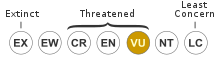
Crested geckos were believed to be extinct prior to rediscovery in 1994.<sup class="reference" id="bkmrk-%5B4%5D-2">[\[4\]](https://en.wikipedia.org/wiki/Crested_gecko#cite_note-seipp-4)</sup> The species is currently being assessed for [CITES](https://en.wikipedia.org/wiki/CITES "CITES") protection and vulnerable status.<sup class="reference" id="bkmrk-%5B11%5D">[\[11\]](https://en.wikipedia.org/wiki/Crested_gecko#cite_note-11)</sup> The biggest single threat to the wild population appears to be the introduction of the [little fire ant](https://en.wikipedia.org/wiki/Electric_ant "Electric ant") (*Wassmania auropunctata*) to New Caledonia.<sup class="reference" id="bkmrk-%5B8%5D-2">[\[8\]](https://en.wikipedia.org/wiki/Crested_gecko#cite_note-devosjoli-8)</sup> The ants prey on the geckos, stinging and attacking in very large numbers, and they also compete with the geckos for food by preying on [arthropods](https://en.wikipedia.org/wiki/Arthropods "Arthropods"). Other threats to the wild population include habitat damage from wildfires, rodent predation, and habitat degradation from introduced deer and pigs.<sup class="reference" id="bkmrk-%5B12%5D">[\[12\]](https://en.wikipedia.org/wiki/Crested_gecko#cite_note-12)</sup>

## <span class="mw-headline" id="bkmrk-reproduction-1">Reproduction</span>

<figure class="mw-default-size mw-halign-right" id="bkmrk-crested-geckos-matin">[![](https://upload.wikimedia.org/wikipedia/commons/thumb/5/52/Crested_mating.jpg/220px-Crested_mating.jpg)](https://en.wikipedia.org/wiki/File:Crested_mating.jpg)<figcaption>Crested geckos mating</figcaption></figure>Little is known about the wild reproductive behavior of crested geckos; available information has been obtained from captive animals. Females generally lay two eggs per clutch, which hatch 60–150 days after they are laid. A female crested gecko only has to mate with a male once in order to lay 2 eggs every 4–6 weeks for a breeding cycle of upwards of 8–10 months. After a breeding cycle females in the wild go through a "cooling" cycle, usually prompted by slight temperature and daylight changes over the winter season.<sup class="reference" id="bkmrk-%5B13%5D">[\[13\]](https://en.wikipedia.org/wiki/Crested_gecko#cite_note-13)</sup> During this time, the females are able to regain the body mass and nutrients they lost during egg-laying.

Crested geckos have two small sacs for calcium on the roof of their mouths. If an egg-laying female does not have enough calcium her sac will be depleted, and she can suffer from calcium deficiency. This can lead to a calcium crash, where the female appears shaky or wobbly, lethargic, has a lack of appetite, and can even result in death.<sup class="reference" id="bkmrk-%5B8%5D-3">[\[8\]](https://en.wikipedia.org/wiki/Crested_gecko#cite_note-devosjoli-8)</sup>

Newly hatched crested geckos will generally not eat until after they have shed and eaten their skin for the first time, relying on the remains of their [yolk](https://en.wikipedia.org/wiki/Egg_yolk "Egg yolk") sack for nutrition.<sup class="reference" id="bkmrk-%5B8%5D-4">[\[8\]](https://en.wikipedia.org/wiki/Crested_gecko#cite_note-devosjoli-8)</sup>

## <span class="mw-headline" id="bkmrk-as-a-pet-1">As a pet</span>

<figure class="mw-default-size" id="bkmrk-juvenile-female-cres">[![](https://upload.wikimedia.org/wikipedia/commons/thumb/6/6b/Crested_gecko_juvenile.jpg/220px-Crested_gecko_juvenile.jpg)](https://en.wikipedia.org/wiki/File:Crested_gecko_juvenile.jpg)<figcaption>Juvenile female crested gecko</figcaption></figure>Though the export of wild crested geckos is now prohibited, biologists exported several specimens for breeding and study before New Caledonia stopped issuing permits to export the species. From these specimens, different breeding lines were established, both in [Europe](https://en.wikipedia.org/wiki/Europe "Europe") and the [United States](https://en.wikipedia.org/wiki/United_States "United States"). The crested gecko is now one of the most widely-kept and bred species of gecko in the world, second only to the common leopard gecko.<sup class="reference" id="bkmrk-%5B8%5D-5">[\[8\]](https://en.wikipedia.org/wiki/Crested_gecko#cite_note-devosjoli-8)</sup>

Crested geckos can be very long-lived. While they have not been kept in captivity long enough for a definitive life span to be determined, they have been kept for 15–20 years or more.<sup class="reference" id="bkmrk-%5B14%5D">[\[14\]](https://en.wikipedia.org/wiki/Crested_gecko#cite_note-bud-14)</sup>